
Teaching students about business while still at school not only builds knowledge of economics, budgeting and the value of money it also prepares them for life. Students who learn to brainstorm and bring ideas to life also learn to set goals, budget and develop their individuality while learning to collaborate with others.
In today's world there are many other core benefits for encouraging students to develop business ideas as with job market uncertainty and entire business sectors going through rapid change and disruption, it is even more crucial to teach students about alternative career opportunities, including self employment. As technology further disrupts education students will increasingly question the value of the education they are receiving and its relevance to the future job market.
Most students show more talent and interest in one area over another. It is important to encourage students to develop their talents and expand their understanding and scope of how business intersects with core subjects.
Whakataukī
I orea te tuatara ka patu ki waho
A problem is solved by continuing to find solutions
A problem is solved by continuing to find solutions
Entrepreneurialism
If the skills students learn are aligned to growth industries and sectors where there is greatest job security, entrepreneurship would become a core subject for all students.
The NZ Curriculum - Education for Enterprise
Education for Enterprise is about promoting an approach to learning – one that is real, relevant, and gives students responsibility for their learning.
The Vision of NZ Curriculum (2007) states the challenges for schools in preparing young people who will:
- be creative, energetic, enterprising, and entrepreneurial
- contribute to the well-being of New Zealand
- seize the opportunities offered by new knowledge and technologies to secure a sustainable social, cultural, economic, and environmental future for our country.
Education for Enterprise provides students with opportunities to:
- become engaged in their learning through school/community partnerships
- apply their curriculum knowledge and skills to real contexts
- use initiative and be resourceful
- gain NCEA credits at the same time as developing the key competencies in senior secondary schooling
- have a better understanding of the world outside school.
Maori aspect on entrepreneurial opportunities
“It was thought that Māori are not encouraged to take the right subjects at school to prepare for entrepreneurial success later on. Furthermore, Māori are not exposed to business when growing up, unlike many non-Māori children whose parents work and own businesses. Therefore, the basics of business and entrepreneurship are not instilled in Māori from an early age. A recommendation from the interviews was to increase Māori awareness and exposure to business activity in order to assist Māori in obtaining the mindset and skills needed to successfully exploit entrepreneurial opportunities.” (Dawson 2012, p.154)
“Entrepreneurship education as early as pre-school, family involvement in the education process, and the encouragement of formal and informal education avenues were suggested in the interviews to enhance the educational attainment of Māori entrepreneurs. These recommendations could be included in changes for future strategies and practices within the education system. The changes could assist Māori to acquire the knowledge and skills needed to develop successful entrepreneurial ventures.” (Dawson 2012, p. 155)
Source: Dawson, B. (2012). Māori entrepreneurship: A Māori perspective (Doctoral dissertation, Auckland University of Technology).
Social enterprise
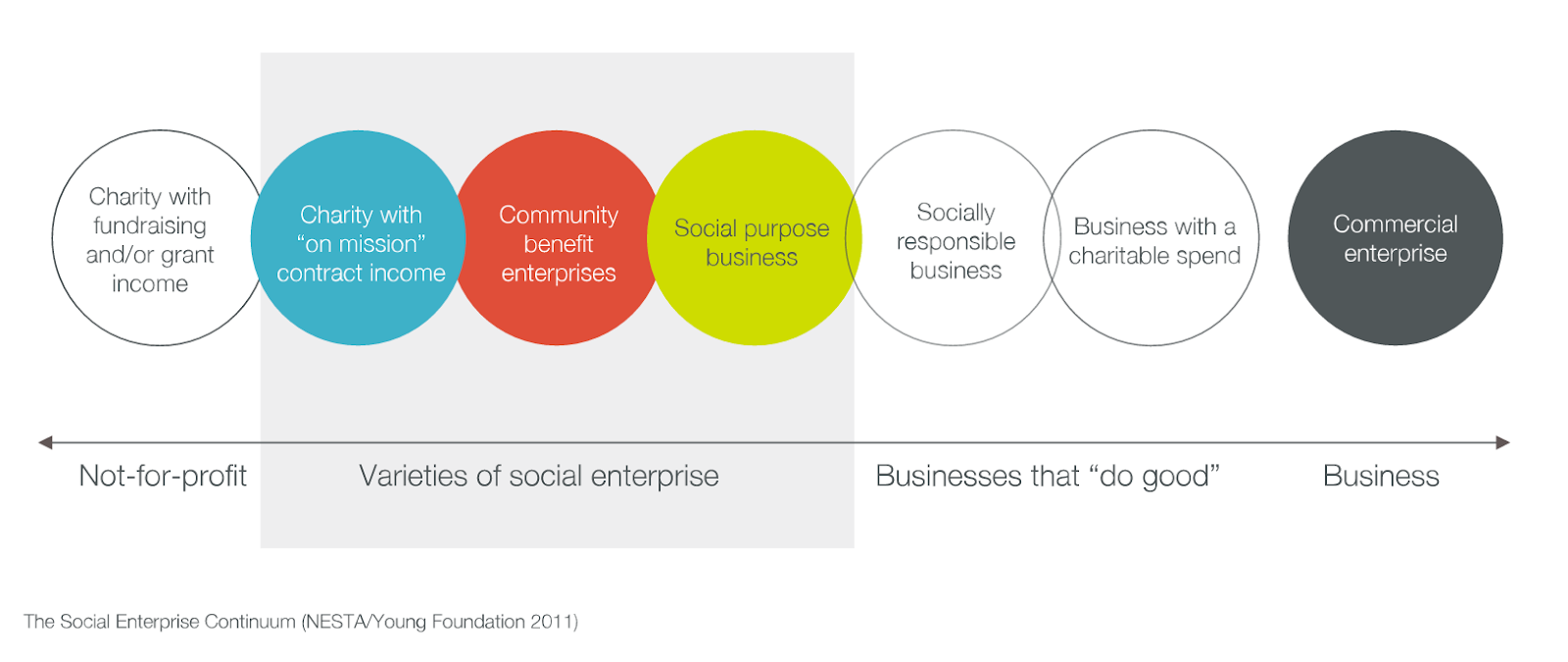
Social enterprise is an organisation that applies commercial strategies to maximise improvements in human and environmental well-being - this may include maximising social impact rather than profits for external shareholders.
Market $hare Board Game
Nick Hindson, from Auckland, originally designed the Market Share game to help entrepreneurs learn more about business. Particularly those who haven't had much in the way of business training. As the game developed they realised that it offered other benefits and provided learning outcomes for students of colleges and universities. And from very early on in the development of Market Share they realised also that their purpose was to
- grow our economy through business education,
- help entrepreneurs build better businesses and
- increase the financial literacy of our next generation."
There is a new version of this board game coming up this winter! If you are interested ordering the game (at teacher-price), you can share your contact details with Nick at: http://tinyurl.com/marketsharegame
Lean canvas as a planning tool
Social Lean canvas is a tool designed to help Social Entrepreneurs understand and build great business models. It is an adaptation of Ash Maurya’s Lean Canvas (leancanvas.com) which he in turn adapted from Alexander Osterwalder’s Business Model Canvas (businessmodelgeneration.com) (and is likewise licensed under the Creative Commons Attribution-Share Alike 3.0 Unported License). Both of these tools are extremely useful for helping companies understand and innovate their business models. However, the creators of the Social Lean canvas found that they miss some key components that are required to help make a social enterprise business model make sense.
The Mind Lab by Unitec - Lean Critiquing Form
We've developed a The Mind Lab by Unitec Lean Form that makes's you to explain and critique your innovation plan in a lean way. We hope this is an useful tool for your DIGITAL 2 assessment, but using it is optional.
Filling in the form and seeking feedback and -forward from your fellow students might help you to explain the innovation in short or critique it. Remember to keep your answers Lean!
Once you have answered in class, you can view the responces from others.
Crowdfunding
With crowdfunding, an entrepreneur raises external financing from a large audience (the “crowd”), in which each individual provides a very small amount, instead of soliciting a small group of sophisticated investors.
In recent years, crowdfunding has become a valuable alternative source of funding for entrepreneurs seeking external financing. Existing empirical analyses report an impressive growing volume of money collected through crowdfunding worldwide. Crowdfunding allows entrepreneurs to raise funding through an open call on the Internet. An important characteristic is the extra private benefits that funders (i.e., “crowdfunders”) enjoy by participating in the crowdfunding mechanism. These additional private benefits vary with the forms of crowdfunding, ranging from an equity-based model, profit-sharing scheme, and lending to outright donations. Although crowdfunding can take different forms, there is little academic understanding of the economic factors that determine an entrepreneur's choice of a particular form of crowdfunding.(Belleflamme, Lambert and Schwienbacher, 2014)
The power of crowdfunding lies in its ability to pool together thousands of small donors in very short periods of time, so it's also a great fit for the aspirations (and wallet) of the younger donor. As the 2012 Millennial Impact Report survey of more than 6,000 active donors aged 20 to 35 revealed, 75 percent prefer to give online. Moreover, 42 percent say they like to "give in the moment" as an emotional response that's often triggered by social media appeals. Millennials may not yet have deep pockets, but it's important for them to know their gifts make a difference. Project-based crowdfunding is a great and cost-effective way to keep these donors philanthropically engaged in smaller fundraising initiatives at their alma mater. (Joly, 2013)
Crowd funding in New Zealand
- http://idealog.co.nz/venture/2014/02/ultimate-guid...
- https://www.snowballeffect.co.nz/
- https://www.pledgeme.co.nz/
- https://givealittle.co.nz/ (just donations and fundraising for causes and charities)
- http://www.pozible.com/collection/detail/109 (Environmental Crowd funding projects in Australia and around the world)
Building an understanding of business
More and more young people are using crowdfunding platforms such as pledgeme.co.nz or kickstarter.com to gain public support to seed fund new start ups and early expansion plans for businesses.
Other ideas that students can use to build an understanding of business, entrepreneurship, marketing, target markets, sales, budgeting and economics include:
- Creating a online shop on a low cost platform such as etsy.com. Online shops can allow students to sell items as diverse as art, crafts, digital assets such as Minecraft characters and simple services eg. car grooming, garage sorting, pet minding etc
- Set up a school-wide or community-based pop-up fair where parents with businesses can sell slow moving or end of line products by hiring a stand where the community can shop.
- Create a community garden at the school and grow vegetables for sale at farmers markets or to parents. Choose seasonal items that make for great after school snacks (for parents to buy) such as strawberries and carrots.
Resources for teachers and students
Young Enterprise offers a range of enterprise programmes and financial literacy resources that can be used by teachers throughout New Zealand. Each resource is designed for a specific age group, and aligns to the New Zealand Curriculum. http://www.youngenterprise.org.nz/
References:
Belleflamme, P., Lambert, T., & Schwienbacher, A. (2014). Crowdfunding: Tapping the right crowd. Journal of Business Venturing,29(5), 585.
Dawson, B. (2012). Māori entrepreneurship: A Māori perspective (Doctoral dissertation, Auckland University of Technology).
Joly, K. (2013). Higher education crowdfunding: After social media and MOOCs, watch out for crowdfunding.(INTERNET TECHNOLOGY). University Business,16(7), 48.

No comments:
Post a Comment